
Sensory integration therapy teaches the child to use many connections in the brain simultaneously. This is achieved by presenting the child with a combination of sensory stimuli (tactile, vestibular, proprioceptive, gustatory, visual, and olfactory) that is appropriate to the child’s deficit. It emphasizes the connections in the brain stem, where many types of sensations come together.
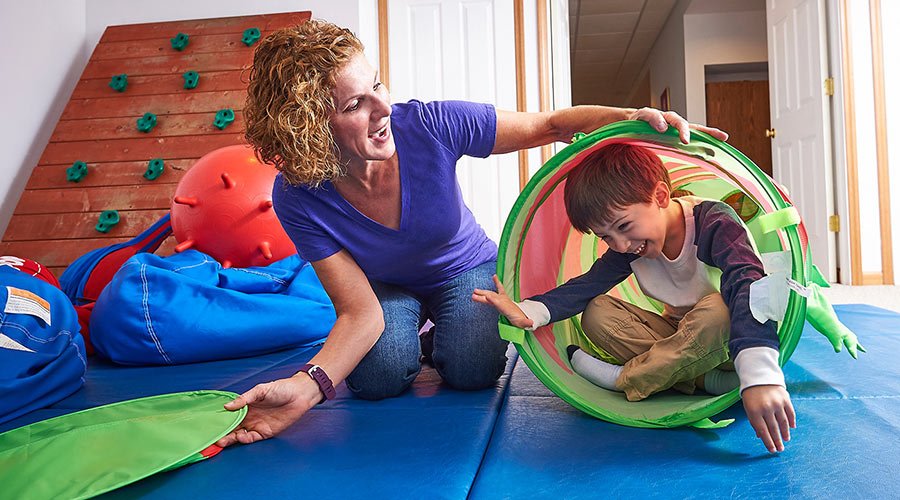
Sensory Integration, or sensory processing, is the ability to take in information through our senses (touch, movement, smell, taste, vision and hearing), put it together with prior information, memories, and knowledge stored in the brain, and respond without over or under reacting. The process of sensory integration begins in utero and occurs throughout the lifespan. Our brain is continuously taking in sensory information from the environment and our body, deciding what to do with the information, and then sending messages to our body to respond. An example of sensory integration would be when reading a book when there is a lawn being mowed nearby, our brain recognizes what the sound is and therefore, that the lawnmower is not a threat. We are able to “tune out” the sound and continue reading. If the mower hits a rock, making a sound that we are unfamiliar with, we immediately respond by checking to make sure there is no danger. If a person has a problem with the process of sensory integration they may be unable to tune out the sound of the lawnmower in order to read their book. They might overreact to the unfamiliar sound of the lawnmower hitting a rock or may not hear it at all. Thus, the brain has difficulty sorting out and making sense of sensory input coming in from the environment, therefore affecting the ability to respond appropriately.